实践与推动助力企业健康持续成长
 咨询电话:
咨询电话:
山东股权激励:民企无需上市也能做,绑定利益实现老板员工共赢
发布时间:2026-03-13 来源:http://www.daoshangbao.com/
山东股权激励:民企无需上市也能做,绑定利益实现老板员工共赢
Shandong equity incentive: Private enterprises can do it without going public, binding interests to achieve a win-win situation for bosses and employees
很多民企老板都会有这样的困惑:如何留住核心人才、调动员工积极性,又不用增加固定成本?不少员工也在纠结:拿着固定工资,干多干少一个样,如何才能获得额外收益,实现个人与公司的共同成长?其实,山东股权激励就能完美破解这一困境。它不是老板“白送股份”的福利,也不是小气不愿给钱的套路,而是一套老板与员工合伙赚钱的科学制度,核心是将公司目标与员工目标深度绑定,实现双方共赢。今天就详细解读山东股权激励,解答“民企不上市,做股权激励有意义吗”的核心问题,用通俗的语言带大家读懂股权激励的核心逻辑与实用价值。
Many private enterprise owners are confused about how to retain core talents, motivate employees, and avoid increasing fixed costs? Many employees are also struggling: with a fixed salary, how can they earn extra income and achieve mutual growth between themselves and the company by doing more or less? In fact, equity incentives in Shandong can perfectly solve this dilemma. It is not a welfare of the boss giving away shares for free, nor is it a petty trick of not giving money. It is a scientific system of the boss and employees working together to make money. The core is to deeply bind the company's goals with the employees' goals, achieving a win-win situation for both parties. Today, we will provide a detailed explanation of Shandong's equity incentives and answer the core question of "Is it meaningful for private enterprises not to go public to engage in equity incentives?" Using plain language, we will guide you to understand the core logic and practical value of equity incentives.
简单来说,山东股权激励,本质上是一种利益共享、风险共担的激励机制,核心是让员工从“只拿死工资的打工者”,转变为“与公司共进退的利益共同体”。不同于传统的薪酬体系,股权激励不依赖固定薪酬支出,而是让员工通过完成目标、助力公司发展,获得股份收益或额外分红——公司盈利越多,员工能分到的好处越多;公司发展不佳,员工也无法获得额外收益,既杜绝了员工“躺平”,也倒逼员工主动为公司长远考虑。
Simply put, equity incentives in Shandong are essentially an incentive mechanism for sharing benefits and risks. The core is to transform employees from "wage conscious workers" to "a community of shared interests with the company". Unlike traditional compensation systems, equity incentives do not rely on fixed salary expenditures, but rather allow employees to achieve goals, contribute to the development of the company, and receive stock returns or additional dividends - the more profits the company makes, the more benefits employees can receive; The poor development of the company and the inability of employees to obtain additional benefits not only prevent employees from "lying flat", but also force them to actively consider the long-term of the company.
很多人对山东股权激励存在误解,认为它是“老板白送股份”,实则不然。真正的股权激励,有着明确的规则和边界,既不是无偿赠予,也不是让员工不劳而获,而是通过合理的制度设计,让员工“多劳多得、优劳优得”。它的核心逻辑的是“价值对等”:员工为公司创造了相应的价值,就能获得对应的股权收益;没有达成目标,就无法享受相关福利,这既体现了公平性,也能充分调动员工的积极性。
Many people have misunderstandings about Shandong's equity incentives, thinking that they are "giving away shares for free from the boss," but in reality, this is not the case. True equity incentives have clear rules and boundaries. They are neither gratuitous gifts nor allowing employees to receive rewards without effort. Instead, through reasonable institutional design, they enable employees to "earn more with more work, and get better with better work". Its core logic is "value equivalence": employees who create corresponding value for the company can receive corresponding equity returns; Without achieving the goal, employees cannot enjoy related benefits, which not only reflects fairness but also fully mobilizes their enthusiasm.
这里补充一个专业知识点:山东股权激励针对民企特点,多采用“虚拟股权”“分红权”“注册股”等适配模式,无需上市,也能灵活落地。其中,分红权侧重短期激励,员工达成业绩目标即可获得相应比例的公司分红,无需承担创业风险;注册股侧重长期绑定,员工长期服务且达标后,可获得公司注册股权,真正成为公司的“主人”,两种模式可根据企业需求灵活搭配,适配不同发展阶段的民企。
Here is an additional professional knowledge point: Shandong equity incentives are tailored to the characteristics of private enterprises and often adopt adaptive models such as "virtual equity", "dividend rights", and "registered shares", which can be flexibly implemented without the need for listing. Among them, dividend rights focus on short-term incentives, and employees who achieve performance goals can receive a corresponding proportion of company dividends without bearing entrepreneurial risks; Registered stocks focus on long-term binding, and employees who serve for a long time and meet the standards can obtain registered equity of the company, truly becoming the "owner" of the company. The two models can be flexibly matched according to the needs of the enterprise and adapted to different stages of development of private enterprises.
一套有效的山东股权激励,绝非“把股权分给员工就完事”,必须具备两个核心要素,缺一不可。第一个核心,是明确的收益规则,让员工清晰知道“干到什么程度,能拿多少收益”。比如,明确规定员工完成年度业绩目标,可获得公司5%的分红;连续服务3年且业绩达标,可获得一定比例的注册股;业绩超额完成,可额外获得分红奖励。这种清晰的规则,能让员工有明确的奋斗目标,知道“付出就有回报”,从而主动发力。
An effective equity incentive system in Shandong is not just about distributing equity to employees, it must have two core elements that are indispensable. The first core is clear profit rules, allowing employees to have a clear understanding of "how much profit they can get at what level of work". For example, it is explicitly stipulated that employees who achieve annual performance targets can receive a 5% bonus from the company; Continuous service for 3 years and meeting performance standards can earn a certain percentage of registered shares; Exceeding performance targets will result in additional dividend rewards. This clear rule can give employees a clear goal to strive for, knowing that 'hard work pays off', and thus taking the initiative to make efforts.
第二个核心,是完善的退出机制,这也是避免员工“拿了股份就躺平”的关键。山东股权激励的退出机制,核心是“权责对等”,比如约定“人在公司就享有股权收益,离职则收回股权及相关权益”;“未达成业绩目标,不享有当期分红”;“员工出现违规违纪,取消股权激励资格”。这样的规则设计,既能保障股权激励的严肃性,也能杜绝员工“小富即安”,确保激励效果长期有效。
The second core is a sound exit mechanism, which is also the key to avoiding employees from "lying flat after taking shares". The core of Shandong's equity incentive exit mechanism is "equal rights and responsibilities", such as agreeing that "people in the company enjoy equity benefits, and those who resign will receive their equity and related rights"; Failure to achieve performance targets does not entitle to current dividends; Employees who violate rules and regulations will have their eligibility for equity incentives revoked. This type of rule design can not only ensure the seriousness of equity incentives, but also prevent employees from being complacent and ensure the long-term effectiveness of incentive effects.
最受民企老板关注的问题是:我们是民企,不上市,做山东股权激励有意义吗?答案是肯定的,而且意义重大。对于老板而言,股权激励最大的优势,是无需增加固定成本,就能实现“留人才、提效率、促发展”。传统薪酬体系下,老板要想留住核心人才,只能不断加薪,增加企业成本;而股权激励,无需额外支出,只需拿出部分利润或股权,就能绑定核心人才,让员工主动为公司长远考虑——毕竟公司发展好了,员工手中的股权才更有价值,形成“公司好、员工好”的良性循环。
The most concerning issue for private enterprise owners is: We are a private enterprise and not listed. Is it meaningful to do equity incentives in Shandong? The answer is yes, and it is of great significance. For bosses, the biggest advantage of equity incentives is that they can achieve "retaining talent, improving efficiency, and promoting development" without increasing fixed costs. Under the traditional salary system, if bosses want to retain core talents, they can only keep increasing salaries and adding to the company's costs; Equity incentives, without additional expenses, only require a portion of profits or equity to bind core talents and encourage employees to actively consider the long-term of the company - after all, when the company develops well, the equity held by employees is more valuable, forming a virtuous cycle of "good company, good employees".
对于员工而言,山东股权激励更是“无风险享收益”的好机会。员工无需承担创业风险,也无需投入资金,只需认真完成工作、达成业绩目标,就能获得工资之外的额外收益,无论是分红还是股权,都是“多劳多得”的回报。这不仅能提升员工的收入水平,还能增强员工的归属感和认同感,让员工从“为老板打工”转变为“为自己奋斗”,主动提升自身能力,助力公司发展。
For employees, Shandong equity incentives are a great opportunity for "risk-free benefit sharing". Employees do not need to bear entrepreneurial risks, nor do they need to invest funds. They only need to conscientiously complete their work and achieve performance goals to receive additional income beyond their salary. Whether it is dividends or equity, it is a return of "more work, more pay". This can not only improve employees' income levels, but also enhance their sense of belonging and identity, allowing them to shift from "working for the boss" to "striving for themselves", actively enhance their own abilities, and help the company develop.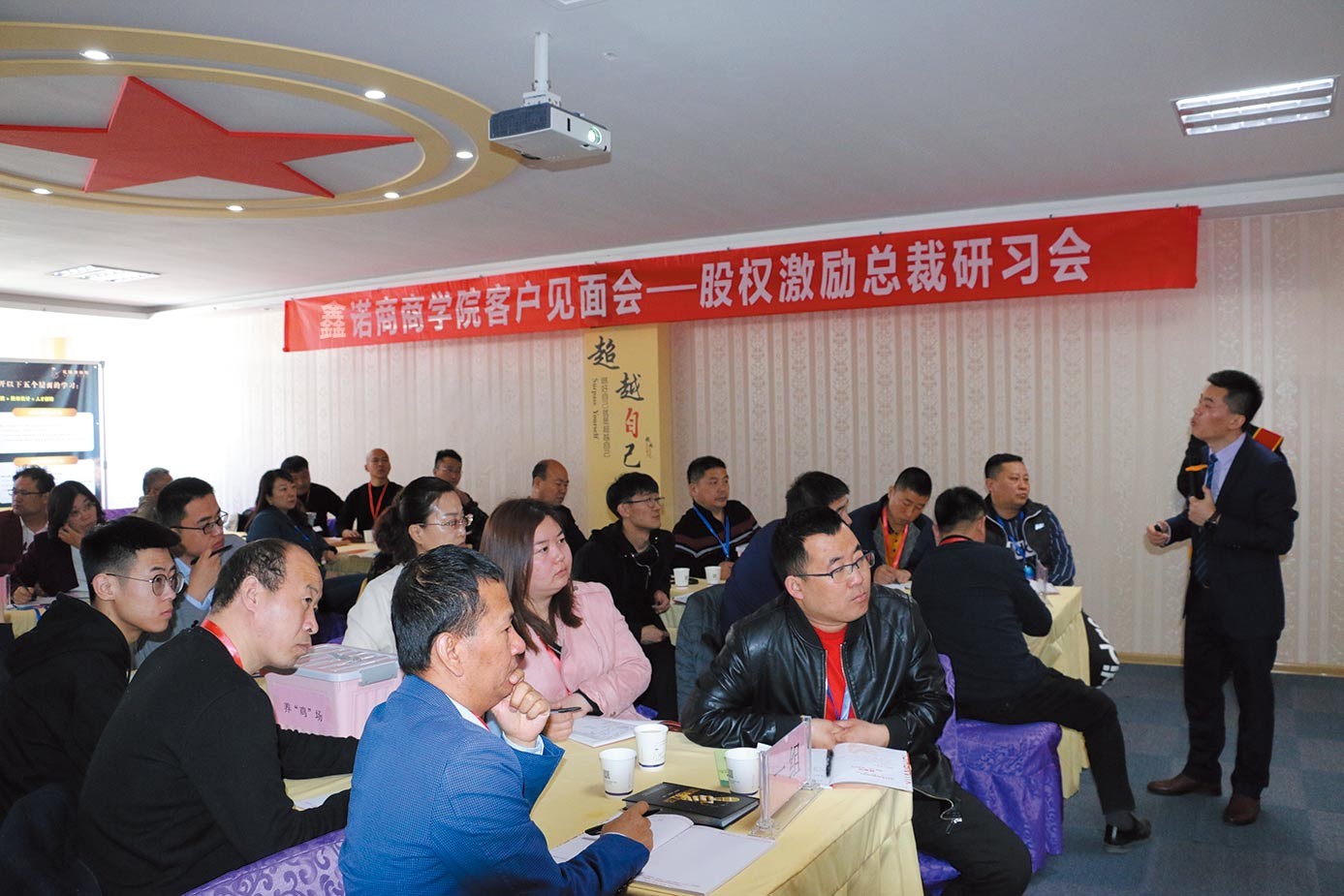
很多民企老板担心,股权激励操作复杂,自己不懂专业知识,无法落地。其实,山东股权激励针对民企的特点,设计得更加简洁、务实,无需复杂的资本运作,也无需专业的金融知识,核心是结合企业的实际情况,制定清晰的规则和目标。当然,股权激励涉及收益分配、规则设计、退出机制等诸多细节,需要科学规划,这也是很多民企选择系统学习股权激励知识的原因。
Many private enterprise owners are concerned that the operation of equity incentives is complex and they do not have professional knowledge, making it difficult to implement. In fact, equity incentives in Shandong are designed more concisely and pragmatically based on the characteristics of private enterprises, without the need for complex capital operations or professional financial knowledge. The core is to formulate clear rules and goals based on the actual situation of the enterprise. Of course, equity incentives involve many details such as income distribution, rule design, and exit mechanisms, which require scientific planning. This is also the reason why many private enterprises choose to systematically learn about equity incentive knowledge.
相较于传统的激励方式,山东股权激励的核心竞争力,在于“低成本、高绑定、共共赢”。它不依赖老板的“人情”,而是依靠规则的“公平”,让老板和员工站在同一战线,共同为公司的发展努力;它不追求“短期利益”,而是注重“长期绑定”,既能留住核心人才,也能推动公司长远发展,尤其适合不上市的民企。
Compared to traditional incentive methods, the core competitiveness of Shandong equity incentives lies in "low cost, high binding, and win-win". It does not rely on the "favor" of the boss, but on the "fairness" of the rules, allowing the boss and employees to stand on the same front and work together for the development of the company; It does not pursue "short-term benefits", but focuses on "long-term binding", which can retain core talents and promote the long-term development of the company, especially suitable for private enterprises that are not listed.
总结来说,山东股权激励,是民企不上市也能落地的高效激励模式。它不是“白送股份”的福利,而是一套“利益共享、风险共担”的科学制度,通过明确的收益规则和完善的退出机制,绑定老板与员工的利益,实现双方共赢。对于民企而言,它能低成本留住核心人才、调动员工积极性;对于员工而言,它能让自己无需承担风险,就能分享公司发展的红利。读懂山东股权激励的核心逻辑,合理落地执行,就能让民企在激烈的竞争中,实现更快、更稳的发展。
In summary, equity incentives in Shandong are an efficient incentive model that private enterprises can implement even without going public. It is not a welfare of "giving away shares for free", but a scientific system of "sharing benefits and risks", which binds the interests of the boss and employees through clear profit rules and a perfect exit mechanism, achieving a win-win situation for both parties. For private enterprises, it can retain core talents at low cost and mobilize employee enthusiasm; For employees, it allows them to share the dividends of the company's development without taking risks. Understanding the core logic of equity incentives in Shandong and implementing them reasonably can enable private enterprises to achieve faster and more stable development in fierce competition.